Dallas: Then, Now & Next | Part One
Dallas: Then, Now & Next | Part One
Remember Valley View Mall? What Was There, What’s There Now & What Could Be Coming Next
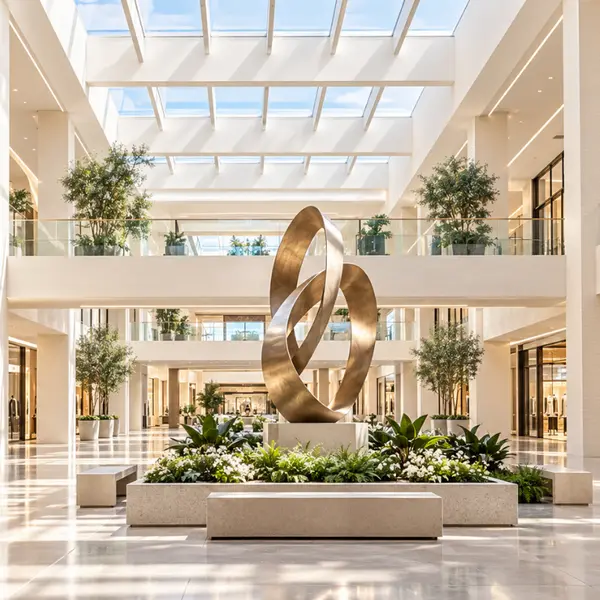
If you grew up in North Dallas, Valley View Mall probably isn’t just a place you remember.
It’s a place you remember doing something.
Maybe you went Christmas shopping there. Maybe you met friends at the mall, wandered through Sanger-Harris or Sears, caught a movie, grabbed something to eat or spent an afternoon there without really needing a reason to be there at all.
For decades, that was what malls were. They weren’t simply places to shop. They were part of the social geography of growing up in Dallas.
And Valley View had a particularly interesting seat at the table.
Today, the mall is completely gone. But after years of plans, delays, demolition and redevelopment ideas that never quite materialized, the land beneath it may be preparing for its biggest transformation yet.
The Dallas Mavericks have selected the former Valley View site as their preferred location for a new arena and entertainment district and have now formally begun the zoning process.
So for Part One of my new series, Dallas: Then, Now & Next, we’re going back to a North Dallas landmark many of us remember.
Because before we talk about what might be coming next, we need to remember what was there first.
THEN: When Valley View Was on the Edge of Dallas
It’s easy to forget just how different North Dallas looked when Valley View began taking shape.
Sears arrived at the site in 1965, years before the mall itself opened. Valley View Center followed in 1973 near Preston Road and the relatively new LBJ Freeway.
At the time, this wasn't the densely developed stretch of North Dallas we know today.
Dallas was pushing north.
New neighborhoods, roads, offices and retail followed that growth, and Valley View became part of the infrastructure of suburban life.
The mall eventually included familiar department-store names such as Sanger-Harris, JCPenney, Sears and Dillard’s, along with scores of smaller shops, restaurants and movie theaters.
And then there was Sanger-Harris itself.
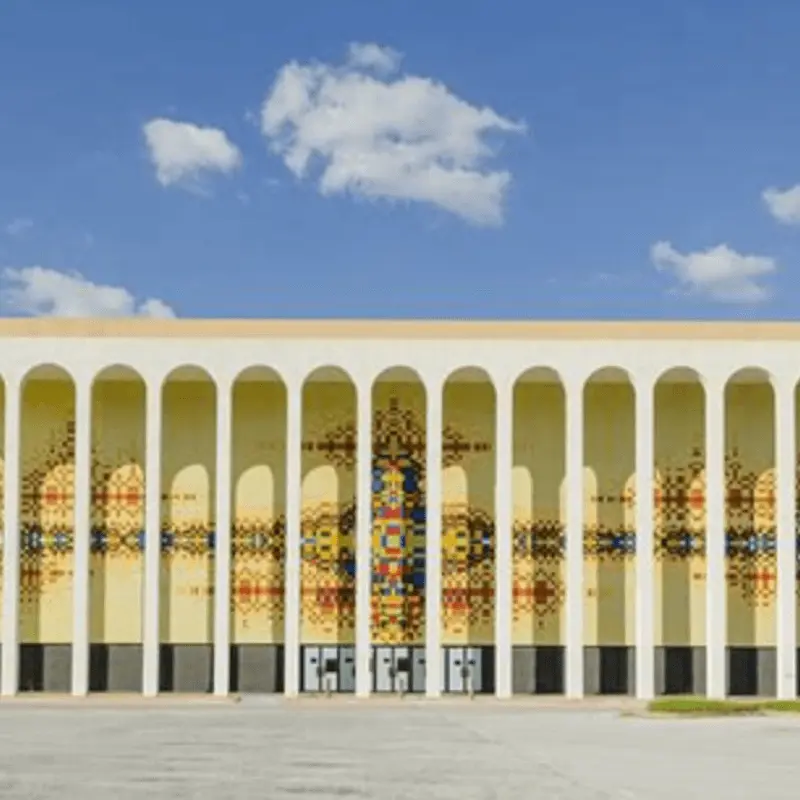
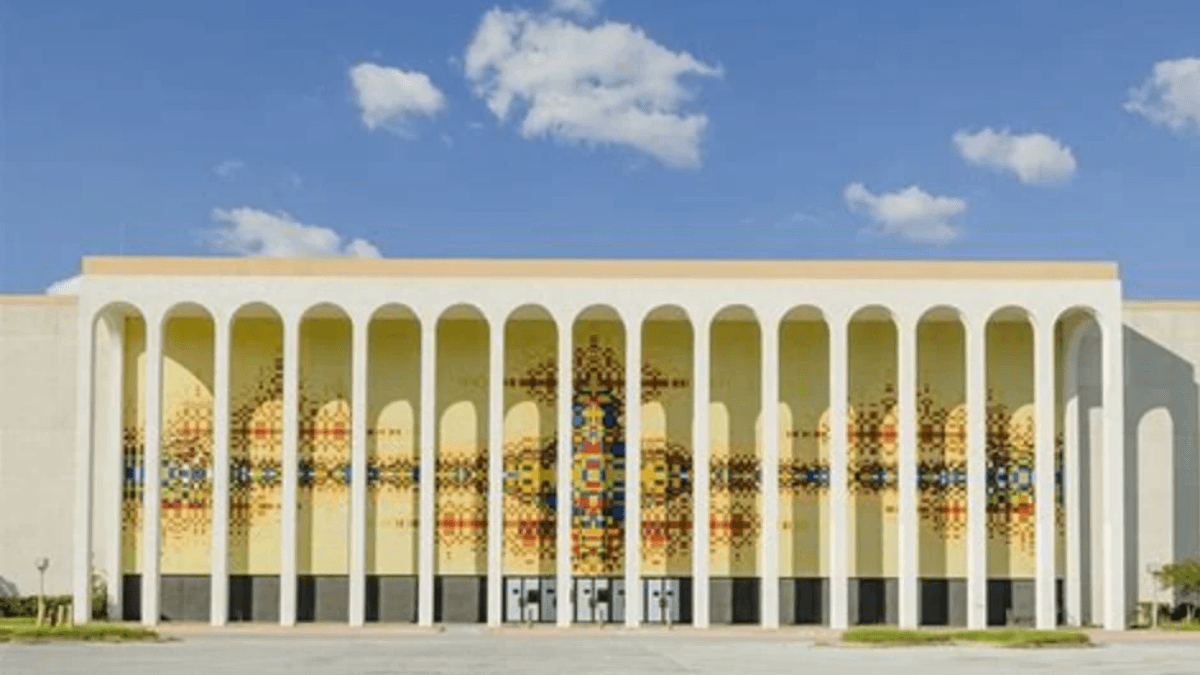
For longtime Dallas residents, the name alone can trigger memories. Its dramatic mosaic murals became one of Valley View’s most recognizable architectural details and remained associated with the site long after Sanger-Harris disappeared as a department-store brand.
But the stores were only part of Valley View’s appeal.
It was a meeting place.
Before online shopping, before smartphones and before we carried entertainment around in our pockets, the mall was somewhere you went.
Sometimes shopping was almost beside the point.
Valley View Wasn't Alone for Long
North Dallas kept growing, and retail followed.
The Galleria opened nearby in 1982 and brought a different kind of shopping experience to the corridor. Over time, competition increased while shopping habits began changing.
By the 1990s and especially the 2000s, Valley View's position had begun to weaken.
Stores left. Empty spaces appeared. The mall that once represented North Dallas growth slowly became a reminder of how quickly retail can change.
And Valley View entered what may be the strangest part of its history.
It didn't disappear.
It lingered.
THE MIDDLE: Dallas Midtown Was Supposed to Change Everything
In 2012, Beck Ventures purchased a large portion of the Valley View property.
The vision that followed was ambitious.
The aging mall would eventually give way to Dallas Midtown, a massive mixed-use development envisioned with residences, offices, restaurants, entertainment, green space and other uses.
It sounded like exactly the kind of transformation an aging mall site needed.
And for years, Dallas heard variations of the same promise:
Something big is coming to Valley View.
In 2013, the City adopted the Valley View-Galleria Area Plan, imagining a much broader redevelopment area surrounding Valley View and the Galleria.
Midtown became part of that story.
Plans changed. Timelines changed. Ownership of different parcels complicated redevelopment. City and developer disagreements followed.
Demolition started, stopped and stretched across years.
Meanwhile, pieces of the old mall remained.
For a while, the AMC theater became one of the last recognizable reasons to visit the property. Much of the surrounding mall had already disappeared, creating the surreal experience of going to a movie theater attached to what increasingly looked like the remains of another era.
AMC finally closed in January 2022.
And without the theater, there was very little reason for the old structure to remain.
From Shopping Mall to Abandoned Landmark
By then, Valley View had gone from outdated to problematic.
The vacant structure attracted trespassers and vandalism. Dallas police eventually designated the property a habitual criminal property.
Then came the fires.
A March 2023 fire injured two Dallas firefighters, and demolition of the remaining structure accelerated.
By May 2023, Valley View Mall was finally gone.
A mall that had opened in 1973 and helped define an era of North Dallas growth had been reduced to open land.
But Dallas still wasn't finished trying to reinvent it.
NOW: From Midtown to the Dallas International District
The City's vision for the larger area evolved too.
What many people had heard called Dallas Midtown became part of a much broader concept known as the Dallas International District.
The district encompasses roughly 440 acres around the former Valley View site and Galleria Dallas, bounded generally by the Dallas North Tollway, LBJ Freeway, Preston Road and Alpha Road.
The vision goes well beyond replacing a mall.
The City has described a more connected, walkable district incorporating housing, offices, hotels, international organizations, education, transportation improvements, parks and public spaces.
That evolution is important because Valley View's story isn't really about one dead shopping mall.
It's about what happens when a part of a city built around one era of development has to reinvent itself for another.
And now, after more than a decade of wondering what would finally happen on the old Valley View property, we may have an answer.
NEXT: Could the Dallas Mavericks Really Move Here?
This is where the story suddenly gets very interesting.
In June 2026, the Dallas Mavericks announced that the organization had entered into option agreements for the potential purchase of approximately 104 acres at the former Valley View Mall site.
The team's vision is considerably larger than an arena.
The Mavericks have described the possibility of a mixed-use destination anchored by a new arena and accompanied by restaurants, entertainment, public green space and family-oriented experiences.
And in September, the idea took an important step forward.
The Mavericks formally began the zoning-change process for roughly 112 acres, including the former mall property and additional parcels.
The requested zoning would allow a sports and entertainment campus.
That means this has moved beyond simply identifying Valley View as an interesting possible location.
But there is an important distinction:
The Mavericks arena is not a done deal yet.
Option agreements are not the same thing as completed land purchases, and filing a zoning request is not the same thing as receiving final approval.
There are still zoning, planning, infrastructure, design and other decisions ahead.
So when you hear that "the Mavericks are moving to Valley View," add an asterisk for now.
The more accurate version is that the Mavericks have chosen Valley View as the location they are actively pursuing for a new arena and entertainment district, secured options covering most of the former mall property and formally started the rezoning process.
That's a significant step.
It just isn't the final one.
Why Valley View?
From a real estate perspective, the location makes a lot of sense.
Look at a map.
The property sits immediately north of LBJ Freeway near Preston Road, with the Dallas North Tollway nearby. Galleria Dallas is just to the west. Addison is minutes away. North Dallas surrounds it, and Plano and Richardson aren't far beyond.
This isn't an isolated piece of land on the outskirts of Dallas anymore.
Quite the opposite.
It's more than 100 acres sitting inside one of the most established and heavily traveled parts of North Dallas.
And assembling that much land in an established urban area is extraordinarily difficult.
That's what makes the former Valley View property unusual.
The failure of the mall ultimately created something potentially more valuable for a completely different era: a very large redevelopment opportunity surrounded by decades of existing neighborhoods, businesses, employment centers and transportation infrastructure.
From Mall Culture to Entertainment Districts
There's also something almost poetic about what could happen here.
Valley View succeeded because people wanted places to gather.
Shopping happened there, of course.
But so did eating, movies, dates, meeting friends and simply being around other people.
Traditional malls lost much of that role as shopping moved online.
Modern mixed-use developments are trying to recreate it in a different form.
Restaurants. Parks. Entertainment. Events. Housing. Hotels. Sports. Walkable public spaces.
If the Mavericks project ultimately happens, the former Valley View property could once again become a place people travel to specifically to spend time.
Not just because Sears is having a sale.
Dallas Keeps Rebuilding Itself
That's really why I wanted Valley View to be Part One of Dallas: Then, Now & Next.
Dallas has never been particularly sentimental about leaving things alone.
We build something.
We love it.
We outgrow it.
Sometimes we neglect it.
And eventually, someone asks what the land could become next.
Valley View has already lived several lives.
It was once a symbol of Dallas expanding north.
Then it became one of North Dallas's major shopping destinations.
Then an aging mall.
Then a redevelopment project that seemed perpetually about to happen.
Then ruins.
Then empty land.
And now?
Possibly the future home of the Dallas Mavericks.
For a piece of Dallas dirt, that's quite a résumé.
What's Next for Dallas: Then, Now & Next?
This is Part One of a new series exploring Dallas places that have changed dramatically, are changing right now or may look completely different in the years ahead.
Some stories will be Then, Now & Next.
Others may simply be Then & Now.
We'll revisit the places Dallas remembers, look at what's there today and, when there's an interesting story unfolding, figure out what might be coming next.
Because understanding Dallas real estate isn't only about knowing what homes are selling for today.
It's also about understanding how Dallas became Dallas and paying attention to where the city is going next.
And if you remember Valley View Mall, I'd love to know:
What do you remember most?
Sanger-Harris? Sears? The movie theater? A particular store? Meeting friends there?
I have a feeling you've got some stories.
Thinking About Buying, Selling or Investing in Dallas?
Changes like the one unfolding at Valley View are a good reminder that real estate doesn't exist in a vacuum. Development, transportation, employment, schools, retail and major public and private investments can all influence how an area evolves over time.
If you're considering buying, selling, relocating or investing in Dallas, Richardson, Plano, Addison or North Dallas, I'd be happy to help you understand not only today's market, but the neighborhoods and changes shaping what's next.

Kelly Reber, REALTOR® | eXp Realty LLC | Texas License #0483312
Licensed since 2000
Dallas | Richardson | Plano | Addison | North Dallas
Dallas native Kelly Reber has been helping buyers, sellers, relocating clients, and investors navigate North Dallas real estate since 2000. She combines deep local knowledge, data-driven strategy, and straightforward advice to help clients make confident real estate decisions.
Learn more: About Me
Categories
Recent Posts