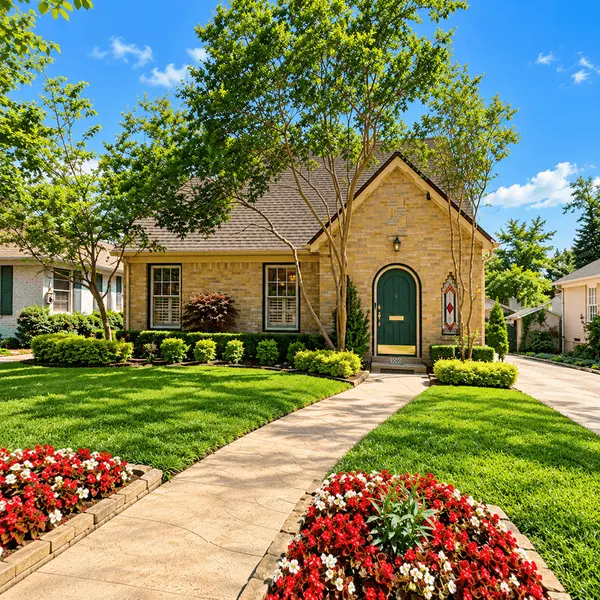
Myth Monday: “More Square Footage Automatically Means a Home Is Worth More”
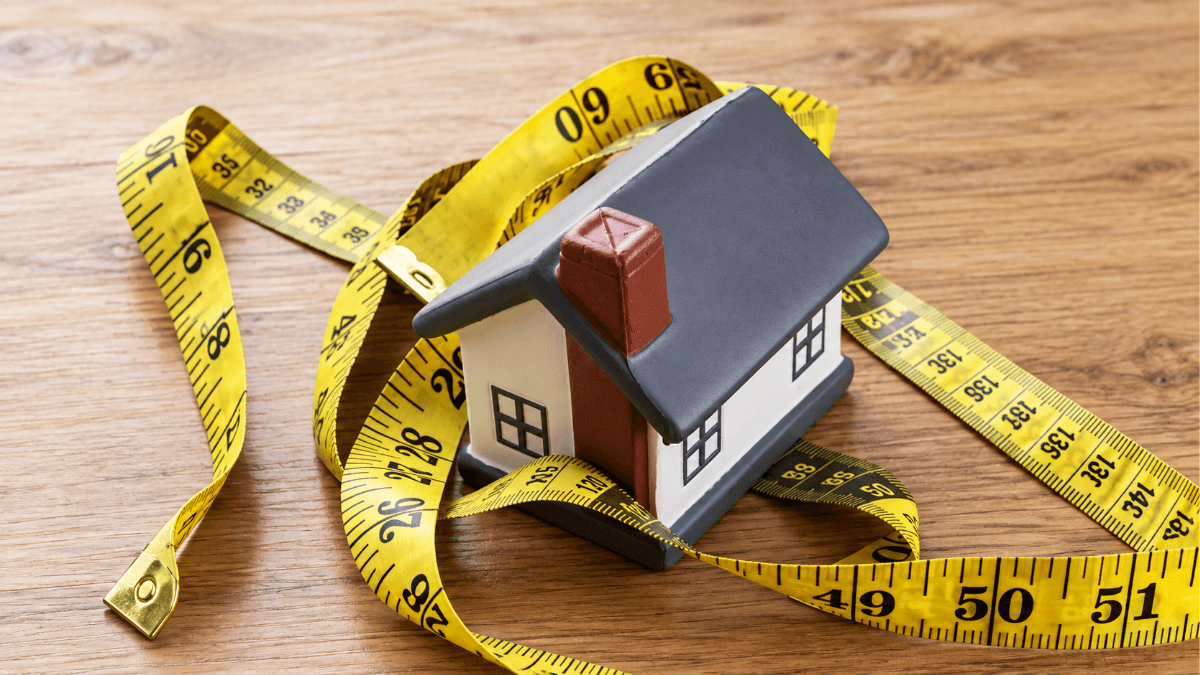
Myth Monday: “More Square Footage Automatically Means a Home Is Worth More”
House A is 2,500 square feet.
House B is 2,900 square feet.
So House B must be worth more, right?
Not necessarily.
Square footage is absolutely one piece of the value puzzle, but real estate would be a whole lot easier if we could simply multiply the number of square feet by a price and call it a day.
We can’t.
Myth: More square footage automatically means a home is worth more.
Reality: Bigger is not automatically more valuable.
Usable layout, condition, updates, location, lot, quality, buyer demand and how a home compares with the competition can matter just as much as, and sometimes more than, the total number of square feet.
Square Footage Matters. It Just Isn't Everything.
Let's start there.
Of course buyers care about size.
A four-bedroom home with 3,500 square feet provides something a 1,700-square-foot home simply can't: more space.
And when we're comparing otherwise similar properties within the same neighborhood, additional living area may absolutely contribute to value.
But the key phrase is:
otherwise similar.
Homes are rarely identical except for square footage.
Fannie Mae's appraisal guidelines recognize exactly that. Appraisers are expected to consider differences between properties based on how the market actually reacts to those differences rather than treating any single feature as having an automatic value.
That's why I don't look at a home and say:
“It's 300 square feet bigger, so it must be worth X dollars more.”
We need to know what those 300 square feet actually give the buyer.
Usable Square Footage Is More Important Than a Big Number
Imagine two homes.
House A: 2,600 square feet
It has:
-
An open kitchen and living area
-
Four appropriately sized bedrooms
-
A dedicated office
-
Good storage
-
A practical laundry room
-
A primary suite separated from the secondary bedrooms
-
Very little wasted space
House B: 2,950 square feet
It has:
-
A huge formal dining room nobody knows what to do with
-
Narrow hallways
-
An awkward upstairs landing
-
Two oversized living areas
-
Small secondary bedrooms
-
Almost no storage
-
A strange addition that doesn't flow with the original house
Which house feels larger?
You might be surprised.
Buyers don't experience a home while staring at the tax record.
They experience it by walking through it.
And sometimes a well-designed 2,600-square-foot home lives much better than a poorly planned 2,950-square-foot one.
A Bad Floorplan Can Absolutely Affect Value
This isn't simply a matter of personal taste.
Fannie Mae's appraisal guidance specifically tells appraisers to consider unusual layouts and floorplans because they can have limited market appeal.
Its examples include things such as bedrooms located on a level without a bathroom or a kitchen separated awkwardly from the dining area. If buyers resist that layout in the market, the appraiser is expected to consider that reaction when analyzing value.
That's why I pay attention to things like:
Does the layout make sense?
Can furniture actually fit in the rooms?
Is there a logical path through the house?
Does the primary bedroom have privacy?
Does an addition feel intentional or tacked on?
Can buyers understand how they're supposed to use the space?
A house can have plenty of square footage and still leave buyers saying:
“I just don't know what I'd do with this floorplan.”
That matters.
Not Every Square Foot Is Equal
Here's another misconception.
People often talk about price per square foot as though every square foot within a home contributes exactly the same amount of value.
But think about how differently buyers value space.
Another 150 square feet added to a cramped kitchen and family room could dramatically improve a home.
Another 150 square feet added to an already enormous upstairs game room might not.
A dedicated home office may be highly useful.
A long hallway technically occupies square footage too.
Both count toward the size of the house.
They don't necessarily create equal buyer appeal.
That's why simply multiplying:
square footage × neighborhood price per square foot
can produce a misleading answer.
Bigger Homes Often Have a Lower Price Per Square Foot
This is another reason price per square foot gets misused.
A larger home does not necessarily command the exact same price per square foot as a smaller home.
Some of a property's value comes from things that don't grow proportionally with the house.
The lot.
Location.
Driveway.
Utility connections.
Garage.
Neighborhood.
School attendance area.
Once those are already part of the property, adding additional interior space doesn't necessarily add value dollar-for-dollar at the same rate.
That's why two houses in the same neighborhood might sell like this:
2,000 square feet at $250 per square foot
and
3,000 square feet at $220 per square foot.
That does not automatically mean the smaller house was “worth more.”
It means price per square foot is a comparison tool, not a universal formula.
Condition Can Easily Outweigh Size
Now imagine two more homes.
They're on the same street.
One is 2,800 square feet but needs:
-
Flooring
-
Paint
-
Kitchen updates
-
Bathroom updates
-
Window repairs
-
HVAC work
-
Exterior maintenance
The other is 2,550 square feet and is beautifully maintained and move-in ready.
Which will buyers prefer?
There isn't one automatic answer.
But the larger house does not receive a free pass simply because it has another 250 square feet.
Fannie Mae requires appraisers to evaluate the overall condition and quality of a home and to account for repairs, deterioration, deferred maintenance and the level of updating or remodeling.
Buyers do the same thing, even if they don't use appraisal terminology.
They're asking:
“What am I getting for my money?”
Updates Matter, But Not Every Update Adds the Same Value
This is another place where the numbers get complicated.
Maybe the smaller house has:
-
A thoughtfully remodeled kitchen
-
Updated bathrooms
-
New flooring
-
Updated lighting
-
New windows
-
Fresh landscaping
The larger property may still have everything original from 1994.
The larger house has more space.
The smaller house may have more immediate appeal.
And then we have to ask another question:
Are the updates things buyers in this particular market actually value?
An expensive renovation doesn't automatically translate dollar-for-dollar into market value.
A seller may have spent $80,000.
That doesn't mean buyers will necessarily pay exactly $80,000 more.
What matters is how the improvements affect the home's utility, condition and desirability relative to its competition.
Location Can Beat Square Footage All Day Long
This is one of the oldest truths in real estate for a reason.
Consider two identical homes.
Same floorplan.
Same square footage.
Same condition.
But one sits:
-
On a quiet interior street
-
Near a neighborhood park
-
With mature trees
-
Away from traffic
The other sits:
-
On a busy road
-
Next to commercial property
-
Backing to traffic
-
Near an undesirable external influence
Should they automatically be worth exactly the same amount?
Probably not.
Fannie Mae's appraisal guidelines specifically require consideration of adjoining properties, street characteristics and other site conditions that can enhance or hurt marketability.
Square footage doesn't cancel out location.
This Is Where Real Estate Gets VERY Hyperlocal
A 3,000-square-foot house in one Dallas neighborhood cannot automatically be compared with every other 3,000-square-foot house in Dallas.
Sometimes we shouldn't even compare it with every 3,000-square-foot house in the same ZIP code.
Different subdivisions can command different buyer demand.
Different sections within a neighborhood can perform differently.
School attendance areas can matter.
Traffic exposure can matter.
Proximity to parks, shopping or major roads can matter.
Lot sizes can matter.
Architectural character can matter.
The Appraisal Institute specifically identifies location, condition, improvements, amenities and market trends among the factors that influence property value.
So when someone tells me:
“My friend's house is 200 square feet smaller and sold for $700,000, so mine has to be worth more,”
my next question is:
“Tell me about your friend's house.”
Because we need a lot more information.
Lot Value Doesn't Show Up in the Living-Area Number
Two homes can both have 2,700 square feet.
One may sit on a standard interior lot.
The other may have:
-
A third of an acre
-
A cul-de-sac location
-
A creek
-
Greenbelt frontage
-
Golf-course views
-
Exceptional privacy
-
Mature trees
-
A premium corner position
-
Additional usable yard
Square footage tells us nothing about those differences.
Fannie Mae requires appraisers to analyze the property's entire site, including size, shape, topography, amenities and any conditions that affect marketability.
In some neighborhoods, lot differences can be a major part of the value story.
And Then There Are Pools, Garages and Outdoor Spaces
Living square footage doesn't tell us everything else the property includes.
What about:
-
A three-car garage?
-
A pool?
-
An outdoor kitchen?
-
A covered patio?
-
A detached workshop?
-
An accessory dwelling unit?
-
An exceptional backyard?
-
Additional parking?
These things may or may not add substantial value depending on the market.
But they're another reminder that a home's value extends beyond the conditioned living area.
A buyer isn't purchasing a spreadsheet cell labeled “2,842 SF.”
They're purchasing the whole property.
Finished Space Doesn't Always Get Counted the Way You Think
Square-footage comparisons can also become complicated because not every finished area is necessarily reported the same way.
Fannie Mae requires appraisers of applicable single-family homes to follow the ANSI measurement standard for above- and below-grade areas.
For example, Fannie Mae considers an entire level below grade if any portion of that level is below grade, even if the space is beautifully finished.
That finished space can still contribute substantially to value, but it may not be reported as above-grade living area.
So you could have two homes that feel similarly spacious but show different official above-grade square footage.
Again:
The number alone doesn't tell the whole story.
Buyer Demand Is Ultimately What Matters
This may be the most important point in this entire discussion.
Real estate value is influenced by what buyers are willing to pay.
The Appraisal Institute defines market analysis around the interaction of supply and demand for a specific property type in a specific area and notes that current and anticipated market conditions are important to valuation.
So imagine a neighborhood where buyers strongly prefer:
3 bedrooms + office + open living space
over
5 bedrooms + formal living + formal dining.
A larger five-bedroom home does not automatically win.
If the smaller floorplan better matches what buyers are looking for, demand may support surprisingly strong pricing.
This is why market knowledge matters.
More Bedrooms Aren't Automatically Better Either
The same logic applies to bedroom count.
Four bedrooms are not automatically worth more than three.
What if the fourth bedroom is tiny?
What if converting space into the fourth bedroom made the living room awkward?
What if the three-bedroom home has a dedicated office, larger bedrooms and a far better flow?
Features need to be evaluated in context.
The question isn't simply:
“How many?”
It's:
“How useful?”
Buyers Compare Homes as Complete Packages
Imagine you're a buyer with a $700,000 budget.
You tour three homes.
Home A
3,200 square feet
Original condition
Busy street
Small backyard
Home B
2,850 square feet
Updated kitchen and bathrooms
Great interior lot
Pool
Excellent floorplan
Home C
3,000 square feet
Newer construction
Smaller lot
Three-car garage
Different neighborhood
You probably aren't standing outside with a calculator saying:
“Home A wins. It has the most square footage.”
You're comparing all three properties as complete packages.
That's exactly what sellers need to understand when pricing.
Your house isn't competing based on size alone.
It's competing based on everything the buyer gets for the price.
This Is Why Comparable Sales Need to Be Truly Comparable
When I prepare a market analysis, I don't simply pull every home with approximately the same square footage.
I'm looking for properties that compete with the subject home.
That may include similarities in:
-
Location
-
Neighborhood
-
Age
-
Style
-
Size
-
Bedroom and bathroom count
-
Lot
-
Condition
-
Updates
-
Garage
-
Pool
-
Floorplan
-
Overall buyer appeal
Fannie Mae's appraisal guidance makes the same basic point: no two properties or transactions are typically identical, so differences need to be analyzed based on market reaction rather than an arbitrary rule.
A 3,000-square-foot comp isn't automatically a good comp just because your house is also 3,000 square feet.
Price Per Square Foot Is Helpful When Used Correctly
I'm not anti-price-per-square-foot.
I use it.
It can be helpful for identifying patterns.
If similar homes are consistently selling within a particular range, that tells us something.
If one sale falls dramatically outside that range, it may prompt us to investigate why.
But I don't want it used like this:
2,700 SF × $250/SF = $675,000. Done.
Instead, I want to know:
Why did one home achieve $260 per square foot?
Why did another achieve $225?
Was one remodeled?
Did one have a pool?
Was one on a premium lot?
Did one seller pay substantial concessions?
Did one back to a major road?
Was one significantly smaller or larger?
Those differences are where the real pricing conversation begins.
Bigger Can Sometimes Be a Disadvantage
Here's something sellers don't always expect.
At a certain point, additional size may actually narrow the buyer pool.
A 5,000-square-foot home has more living space than a 3,000-square-foot home.
But not every buyer wants:
-
Higher utility expenses
-
More rooms to furnish
-
More space to clean
-
More maintenance
-
A larger overall property to manage
Particularly when buyers are downsizing or seeking efficiency, more square footage may not necessarily equal more desirability.
The “best” size depends on the buyer.
A Smaller Home Can Sell for More
And yes, sometimes the smaller house really does sell for more.
Not just more per square foot.
More money overall.
Because perhaps it has:
-
The better street
-
The better lot
-
The pool
-
Superior renovations
-
Better architectural appeal
-
Better condition
-
Stronger buyer demand
-
A far better floorplan
There's nothing strange about that.
It simply means buyers valued the entire package more highly.
This Matters When You're Preparing to Sell
If you're thinking about selling, I don't want you comparing your home only by square footage.
And I definitely don't want you automatically assuming:
“The Joneses have 2,400 square feet and sold for $600,000. I have 2,800, so mine has to be worth at least $700,000.”
Maybe it is.
Maybe it's worth more.
Maybe it's worth less.
The additional 400 square feet is one factor.
Now we need to understand everything else.
What I Want to Know Before Pricing a Home
When I'm evaluating a property, square footage is part of the analysis.
But I'm also looking at:
Layout
Does the space function well?
Condition
Is the home move-in ready or does it need work?
Updates
How does it compare with current buyer expectations?
Location
Where does it sit within the neighborhood?
Lot
Is there something especially desirable or undesirable about it?
Competition
What else can buyers purchase at the same price?
Recent sales
What have buyers actually paid for similar homes?
Pending sales
What appears to be getting traction right now?
Market demand
How quickly are similar properties moving?
Seller concessions
What did those comparable sellers actually give up to close?
That gives us a much clearer picture than dividing a sales price by square footage.
Final Thoughts
Square footage matters.
But value isn't measured with a tape measure alone.
A larger home isn't automatically the more valuable home.
Buyers care about how the space works.
They care about condition.
They care about location.
They care about the lot.
They care about updates.
They care about what else their money can buy.
And ultimately, they decide which combination of those things is worth paying for.
That's why I prefer to think of square footage as one chapter in the story of a home's value.
Not the entire book.
Wondering What Your Home Is Actually Worth?
If you're thinking about selling in Dallas, Richardson, Plano, Allen, Frisco, Addison or another North Texas community, I'd be happy to look beyond the square footage.
We'll evaluate your home's layout, condition, updates, location, lot, recent comparable sales, current competition and the features buyers are responding to in your specific market.
Because two houses can have almost identical square footage and very different values.
The goal isn't to price your home based on how big it is. It's to understand how buyers are likely to value the entire property.
Reach out anytime if you'd like to take a closer look at where your home fits in today's market.

Kelly Reber, REALTOR® | eXp Realty LLC | Texas License #0483312
Licensed since 2000
Dallas | Richardson | Plano | Addison | North Dallas
Dallas native Kelly Reber has been helping buyers, sellers, relocating clients, and investors navigate North Dallas real estate since 2000. She combines deep local knowledge, data-driven strategy, and straightforward advice to help clients make confident real estate decisions.
Learn more: About Me
Categories
- All Blogs (139)
- Addison (1)
- Buyers (109)
- Dallas (13)
- Investors (46)
- Listings (2)
- McKinney (1)
- Plano (3)
- Richardson (12)
- Sellers (76)
- Series: Before it was North Dallas (8)
- Series: Dallas Day Trippin' (8)
- Series: Dallas Has a Story for That (1)
- Series: Dallas Neighborhoods to Watch (10)
- Series: Myth Monday (26)
- Series: RISD (7)
- Series: Then Now Next (1)
Recent Posts