Neighborhoods to Watch | Chapter 2: Neighborhoods That Still Feel Like Old Dallas Part Seven: Hollywood Heights + Santa Monica — Where Dallas’ Tudor Charm Still Lives
Neighborhoods to Watch | Chapter 2: Neighborhoods That Still Feel Like Old Dallas
Part Seven: Hollywood Heights + Santa Monica — Where Dallas’ Tudor Charm Still Lives
There are Dallas neighborhoods that have changed almost beyond recognition.
And then there are places where you can turn onto a quiet, tree-lined street and feel as though Dallas has somehow held onto a piece of itself.
Hollywood Heights and Santa Monica are one of those places.
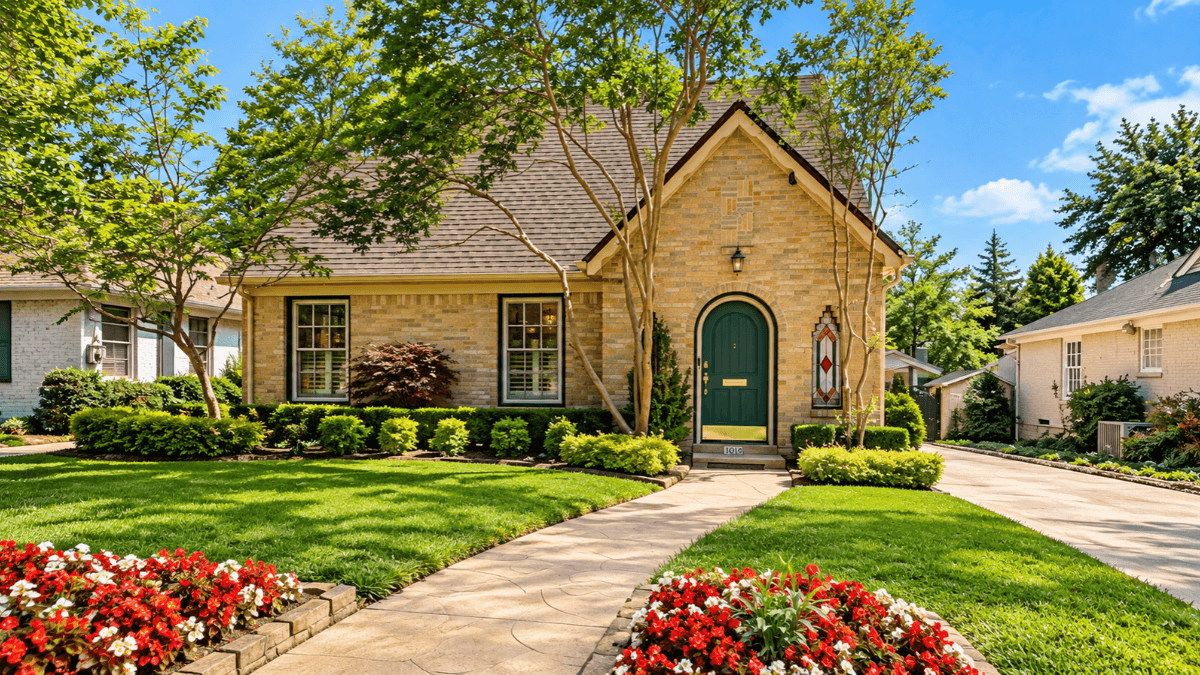
Tucked into Old East Dallas near Lakewood and White Rock Lake, the neighborhood is known for its storybook Tudor cottages, mature trees, detailed stonework and streets filled with homes that look noticeably different from much of what has been built across Dallas in recent decades.
But the reason Hollywood/Santa Monica still looks and feels this way isn't an accident.
Its story goes back nearly a century.
A Dallas Neighborhood Born in the 1920s
The land has a history stretching much further back, but the neighborhood we recognize today began taking shape in the 1920s.
Developer J.B. Salmon, who was also involved in the development of Kessler Park in Oak Cliff, purchased the property and created the Hollywood Addition. The area later expanded to include the Santa Monica and Collier additions.
And here's one of my favorite details about its history:
Hollywood wasn't originally envisioned as Dallas' grandest neighborhood.
Instead, it was developed as a more middle-class counterpart to nearby Lakewood.
What it lacked in mansion-sized homes, however, builders often made up for in craftsmanship.
Many of the homes were relatively modest two and three-bedroom cottages constructed of brick or stone, but their architectural details could be anything but modest.
Think decorative masonry. Leaded and stained glass. Detailed chimneys. Stone accents. Terraced lawns. Arched doorways. Steep rooflines.
Those details are a big part of why driving through Hollywood/Santa Monica today feels so different from driving through many newer Dallas neighborhoods.
The Tudors Are the Stars, But They're Not the Whole Story
If Hollywood Heights has a signature look, it is undoubtedly the Tudor cottage.
The steeply pitched roofs, prominent chimneys, arched entrances and combinations of brick and stone give portions of the neighborhood an almost storybook quality.
But look more closely and you'll find considerably more architectural variety.
The neighborhood also includes examples of French and Spanish Eclectic architecture, Craftsman homes, Minimal Traditional houses, Pueblo Revival and other styles.
That mix is part of what makes the streets interesting.
The houses aren't identical.
They simply feel as though they belong together.
And that's an increasingly rare quality in a city where redevelopment can sometimes change the scale and character of a neighborhood one lot at a time.
Why Does Hollywood/Santa Monica Still Look Like Hollywood/Santa Monica?
Here's where this neighborhood becomes especially interesting from a real estate perspective.
Hollywood/Santa Monica became a City of Dallas Conservation District in 1989.
A conservation district isn't quite the same thing as simply living in an older neighborhood. The City of Dallas creates conservation districts through specific ordinances containing development and architectural standards designed around the characteristics residents want to preserve.
In Hollywood/Santa Monica, those protections help conserve the architectural and cultural qualities that make the neighborhood distinctive.
That can affect things such as setbacks, additions, exterior alterations, garages, architectural features and other changes to a property.
Today, owners planning certain exterior work within a Dallas conservation district may need a Conservation District Work Review in addition to permits that would otherwise be required.
For buyers, that's an important distinction.
Those protections help preserve the visual character that makes neighborhoods like Hollywood/Santa Monica so desirable, but they can also mean that renovating or expanding a home requires more homework than it might elsewhere.
In other words, if you're buying an old Tudor because you love the neighborhood's character, the rules designed to help protect that character become part of the real estate conversation too.
Old Dallas Without Feeling Frozen in Time
One reason I think Hollywood Heights and Santa Monica fit this chapter so well is that preservation here doesn't mean the neighborhood feels like a museum.
People actually live in these houses.
Homes have been renovated. Kitchens have been updated. Families have changed. Dallas has grown dramatically around it.
Yet the neighborhood has retained an unusual amount of architectural continuity.
Approximately 800 homes make up the Hollywood/Santa Monica Conservation District, set among pecan, oak, redbud and crape myrtle trees.
And its location doesn't hurt.
The neighborhood sits near Samuel Grand Park, Tennison Memorial Golf Course, Lakewood Country Club and White Rock Lake, while still being relatively close to Downtown Dallas.
That combination of established architecture, mature landscaping and access to some of East Dallas' best-known amenities is difficult to recreate from scratch.
Why Architecture Matters in Real Estate
This is also where Hollywood/Santa Monica offers a lesson that extends beyond historic homes.
Neighborhood character has value.
Not necessarily because every buyer wants a 1920s Tudor. Plenty don't.
But buyers often respond to places that have a clear identity.
You know when you've entered Hollywood Heights.
You know when you're in Lakewood.
You know when you're driving through the M Streets.
And when a neighborhood has maintained that identity over decades, the architecture itself becomes part of what people are buying.
You're not simply buying square footage.
You're buying the street. The tree canopy. The scale of the neighboring houses. The craftsmanship. And the feeling you get when you turn the corner.
Those things don't fit neatly into a price-per-square-foot calculation, but anyone who has spent enough time looking at Dallas real estate knows they can matter tremendously.
What Buyers Should Know About Hollywood Heights + Santa Monica
If you're considering buying here, the charm comes with some practical considerations.
Many of these homes are approaching or have passed the century mark, so the condition of the individual property matters enormously.
Foundation, plumbing, electrical systems, drainage, roofing, previous additions and the quality of past renovations deserve careful attention.
Two houses that appear similar from the curb can have very different histories behind the walls.
And because this is a conservation district, buyers considering future additions or significant exterior changes should understand the applicable City of Dallas requirements before assuming a project will be permitted exactly as envisioned.
None of that is necessarily a negative.
It's simply part of buying a historic Dallas home intelligently.
Why Hollywood Heights + Santa Monica Still Feel Like Old Dallas
Maybe it's the Tudors.
Maybe it's the mature trees.
Maybe it's the smaller homes with architectural details builders rarely reproduce today.
Or maybe it's simply the fact that nearly a century after the neighborhood began taking shape, you can still recognize what its original developers were trying to create.
Hollywood Heights and Santa Monica weren't designed to be Dallas' biggest or flashiest neighborhoods.
They were built as places where relatively modest homes could still have craftsmanship, personality and a sense of permanence.
Almost 100 years later, that's exactly what makes them special.
And it's why they belong in this chapter.
Neighborhoods That Still Feel Like Old Dallas
Hollywood Heights + Santa Monica is Part Seven of Neighborhoods to Watch and the second stop in Chapter 2: Neighborhoods That Still Feel Like Old Dallas.
In Part Six: Bishop Arts, we explored how a streetcar-era commercial district evolved into one of Dallas' most recognizable destinations while holding onto the scale, architecture and independent personality that make it feel distinctly different from much of modern Dallas.
Now we've traveled east to Hollywood Heights and Santa Monica, where Tudor cottages, mature trees and nearly a century of architecture tell another version of the Old Dallas story.
Next up: Part Eight — Lakewood.
Explore the full Neighborhoods to Watch series for more Dallas neighborhoods, local history and the stories behind the places people call home.
Thinking About Buying or Selling in Dallas?
Historic and established neighborhoods can be some of the most interesting parts of the Dallas real estate market, but they can also require a little more homework. Architecture, renovation history, conservation rules, lot characteristics and even the surrounding streets can all influence value.
If you're considering buying or selling in Hollywood Heights, Santa Monica, Lakewood or another established Dallas neighborhood, I'd be happy to help you look beyond the listing photos and understand the property, the neighborhood and the market around it. Let's chat!

Kelly Reber, REALTOR® | eXp Realty LLC | Texas License #0483312
Licensed since 2000
Dallas | Richardson | Plano | Addison | North Dallas
Dallas native Kelly Reber has been helping buyers, sellers, relocating clients, and investors navigate North Dallas real estate since 2000. She combines deep local knowledge, data-driven strategy, and straightforward advice to help clients make confident real estate decisions.
Learn more: About Me
Learn more about me, explore my Dallas real estate guides, or reach out when you're ready to talk about your next move.
Categories
Recent Posts