Before It Was North Dallas: Part Nine: The Fire That Shaped Downtown Plano
Before It Was North Dallas: Roads, Rails and the Shape of the Suburbs
Part Nine: The Fire That Shaped Downtown Plano
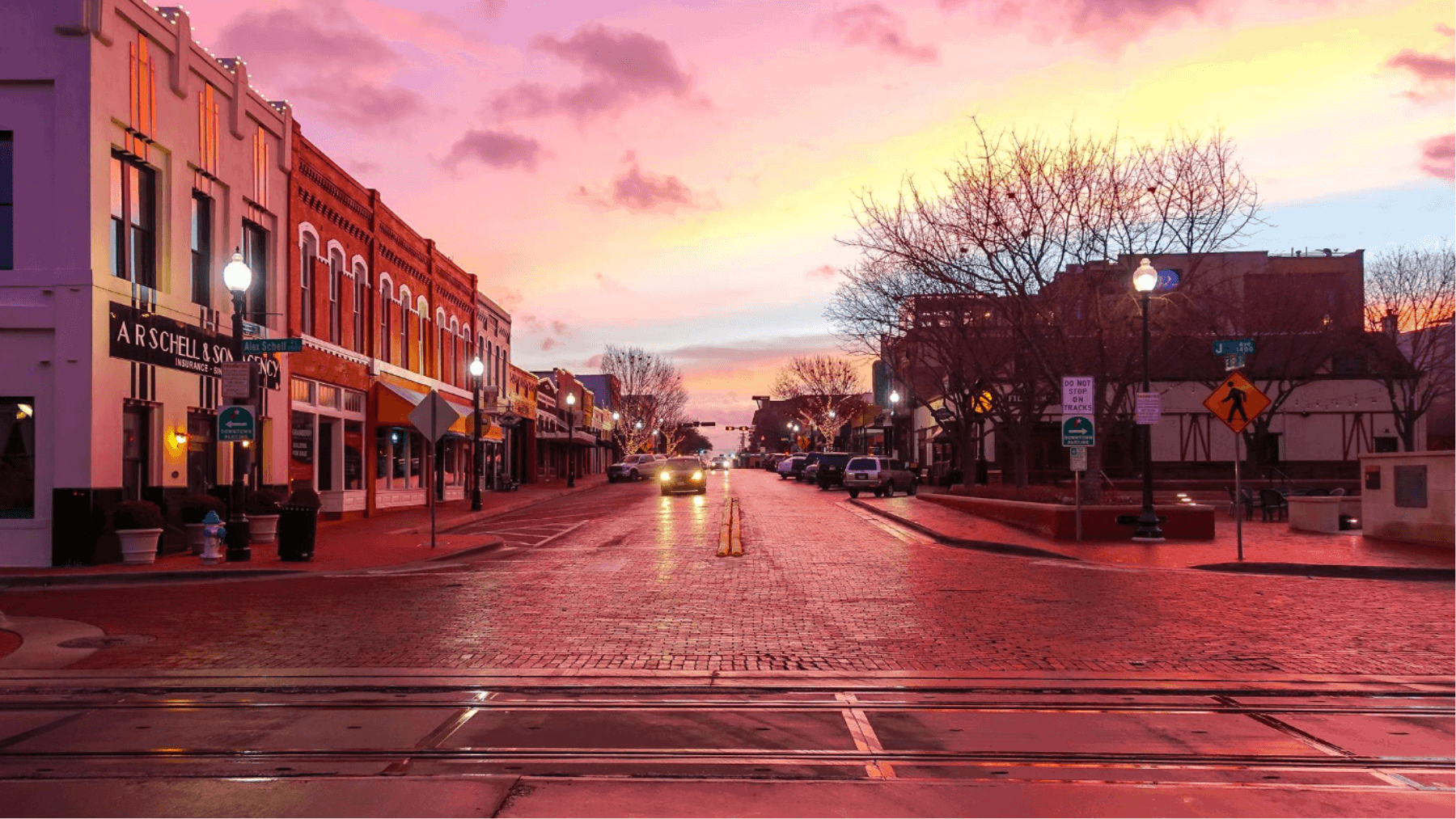
Historic Downtown Plano is one of those places people love because it still feels like a real downtown.
Brick storefronts. Walkable blocks. Local restaurants. Old buildings with character. A DART station nearby. A street grid that does not feel like it was created by someone staring at a spreadsheet and forgetting humans exist.
But the downtown people enjoy today was shaped by something far less charming.
Fire.
Plano’s early business district was repeatedly damaged by major fires, and one of the last great fires came in 1895, when all but a few downtown buildings were destroyed. The City of Plano’s Heritage Preservation Plan explains that after those late-1890s fires, Downtown Plano began rebuilding with brick buildings and storefronts, helping create the historic character people still recognize today.
That means the brick storefronts we admire now are not just pretty.
They are evidence of a town that decided to rebuild stronger.
Before the Fire, Plano Was a Railroad Town
Like Richardson, Plano’s early growth was closely tied to transportation.
Plano was incorporated in 1873, just months after the Houston & Texas Central Railway opened and helped make the city a trading center for the farming community of southwest Collin County.
That railroad connection mattered.
It brought people, goods and opportunity into town. It helped turn Plano into a regional commercial center for surrounding farms and families. Downtown became the place to shop, trade, conduct business and gather.
Before malls, corporate campuses and master-planned subdivisions, downtown was the center of gravity.
And in the late 1800s, that center of gravity was vulnerable.
Many early commercial buildings were made of wood. Businesses were clustered close together. Firefighting resources were limited compared with today. One spark could become a community-wide disaster.
And in Plano, it did.
The Great Fire of 1895
The City of Plano’s Heritage Preservation Plan describes the late 1800s as a period of substantial growth, but also a period marked by numerous fires that repeatedly destroyed the business district. One of the last great fires occurred in 1895, when all but a few buildings were totally destroyed.
Pause on that for a second.
All but a few.
Imagine the heart of a town burning, not just one building, not just one storefront, but nearly the entire business district.
For a small community, that was not only a property loss. It was an economic loss, a social loss and a civic gut punch.
The stores were where people bought supplies.
The banks were where business was handled.
The upper floors often housed professional offices, lodge halls or gathering spaces.
Downtown was not a cute weekend destination yet. It was the working center of daily life.
Losing it meant Plano had to decide what kind of town it was going to become next.
Plano Rebuilt in Brick
This is where the story turns.
After the fires of the late 1890s, Plano began rebuilding. The City’s Heritage Preservation Plan notes that Downtown Plano, as we know it today, began to take form as the community rebuilt new brick buildings and storefronts.
That choice mattered.
Brick construction was more durable than the wood-frame commercial buildings that had made earlier fires so destructive. It also gave downtown a stronger, more permanent architectural identity.
The result is still visible along 15th Street and the surrounding historic downtown blocks.
Many of the features people associate with Historic Downtown Plano today, the rhythm of the storefronts, the masonry, the traditional commercial buildings, the sense of a compact main street, are tied to that rebuilding period.
The fire destroyed much of what came before.
But the rebuild created the downtown character people love now.
The Buildings Still Tell the Story
You can still see pieces of that post-fire story in individual downtown buildings.
The W. D. McFarlin Building at 1011 E. 15th Street is one example. According to the Texas Historical Commission marker, McFarlin purchased the building in 1885, but a fire in 1895 destroyed the original structure. He rebuilt it in brick, and it later housed Schoolfield Drugs, Carpenter’s drug store and Allen Brothers Drug Store.
That is exactly why historic buildings matter.
A building like that is not just an old storefront. It is a record of disaster, rebuilding, commerce and continuity.
The same idea shows up throughout the downtown district. The Plano National Bank and I.O.O.F. Lodge also connect to the 1895 fire. Their earlier shared building was destroyed, and the rebuilding period helped reshape the commercial streetscape.
When you walk through Downtown Plano, you are not just seeing “old buildings.”
You are seeing decisions made after loss.
Fire Changed the Look of Downtown
In a strange way, the disaster gave Plano a more unified downtown identity.
The fire wiped out much of the earlier business district, then the rebuilding effort created a wave of brick commercial buildings in a relatively concentrated period. That is one reason the historic core has such a recognizable look.
The Downtown Plano organization notes that a significant number of existing buildings have remained standing since the rebuild after the 1895 fire. It also describes the modern downtown as a vibrant district of performing arts, galleries, event venues, shops and restaurants set against historic buildings, the Plano DART station and Haggard Park.
That is the “then and now” magic of this story.
A 19th-century fire helped create the historic backdrop for a 21st-century destination.
People go downtown now for dinner, coffee, festivals, live music, boutiques, galleries and photos in front of charming brick buildings.
Most probably do not realize those buildings are connected to a moment when Plano had to rebuild almost from ashes.
The Real Estate Lesson Hidden in the Bricks
This series keeps coming back to the same idea: places are shaped by the forces that connect them, damage them, rebuild them and give them identity.
For Richardson, the railroad created the townsite.
The Interurban connected early suburbs to Dallas.
The Red Brick Road strengthened Richardson’s automobile connection.
And in Plano, fire reshaped downtown’s physical character.
That matters in real estate because character is not random.
The places buyers fall in love with usually have layers. Historic buildings, walkable streets, local businesses, civic investment, preserved architecture and proximity to transit all work together to create a sense of place.
Downtown Plano has that because it survived, adapted and kept enough of its historic fabric to feel different from newer commercial areas.
That is why people respond to it.
It has a story you can see.
Preservation Is Also a Choice
Historic downtowns do not preserve themselves.
They survive because communities decide they are worth keeping, reusing and reinvesting in.
Downtown Plano changed from a traditional business center into a specialty retail district by the 1980s, then the city began investing in revitalization during the 1990s. In 2002, DART service began at 15th Street, helping reconnect Downtown Plano to the larger region by rail once again.
That makes Downtown Plano a perfect fit for this chapter of Before It Was North Dallas.
Its story includes railroads, fire, rebuilding, preservation, transit and modern redevelopment.
It is not frozen in time.
It is layered.
And layered places are almost always the most interesting.
Before It Was North Dallas
Before Plano became one of the largest and most recognized suburbs in North Texas, it was a farming community built around rail access and downtown commerce.
Then fire changed its path.
The 1895 fire destroyed nearly the entire business district, but the rebuilding that followed gave Downtown Plano much of the brick character people still love today.
So the next time you are walking down 15th Street, grabbing dinner, meeting a friend, browsing a shop or waiting for the DART train, look at the storefronts a little differently.
Those bricks are not just decoration.
They are survival.
They are resilience.
They are Plano deciding to rebuild, and accidentally giving future generations one of the best historic downtowns in North Texas.
What piece of North Dallas history do you think deserves to be remembered?
Next in the series: We are heading to one of Dallas’ most familiar destinations, where a former cotton field, Caruth land, modernist design and public art came together to create much more than a mall.
💻 Keep up with the whole Before It Was North Dallas series here: Before It Was North Dallas
Here is your local-history field trip: go to Downtown Plano, stand on 15th Street, look at the brick storefronts and ask yourself what had to happen for those buildings to be there. Then reward your historical curiosity with coffee, dinner or dessert. Research is research, and sometimes it comes with a patio and a fork.
As a Dallas native and longtime North Dallas REALTOR®, I love helping people understand the stories behind the places they live, love and invest in. If you are thinking about buying, selling or simply learning more about Richardson, Plano, Addison or North Dallas, reach out anytime. I am always happy to talk homes, history and what makes each community feel like itself.

Kelly Reber, REALTOR® | eXp Realty LLC | Texas License #0483312
Licensed since 2000
Dallas | Richardson | Plano | Addison | North Dallas
Dallas native Kelly Reber has been helping buyers, sellers, relocating clients, and investors navigate North Dallas real estate since 2000. She combines deep local knowledge, data-driven strategy, and straightforward advice to help clients make confident real estate decisions.
Learn more: About Me
Categories
Recent Posts