Neighborhoods to Watch | Chapter Two Part 9: The M Streets & Greenland Hills
Neighborhoods to Watch | Chapter Two: Neighborhoods That Still Feel Like Old Dallas
Part Nine: The M Streets & Greenland Hills: Where a Century of Tudor Charm Still Lines the Streets
Steep rooflines, arched doorways, tree-lined blocks and a neighborhood plan that dates back to 1923. The M Streets have been charming Dallas for more than a hundred years, and they still haven't lost their touch.
If you've ever driven down Monticello or Mercedes on a fall afternoon, you know the feeling.
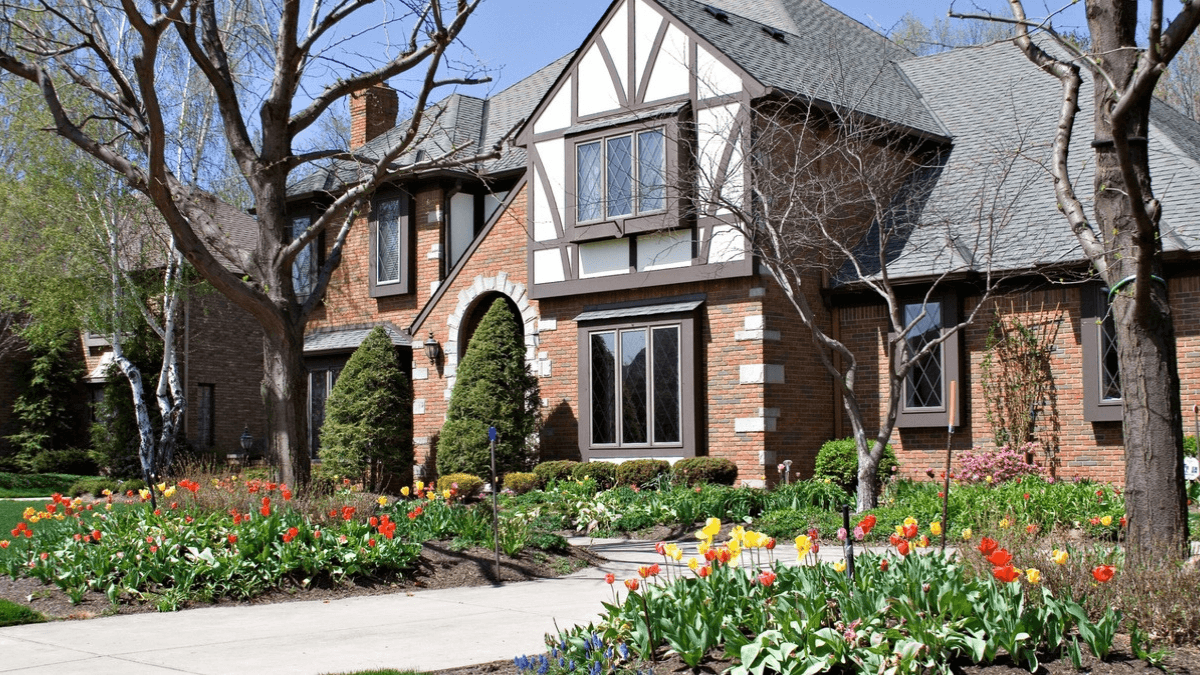
One storybook house after another. Steep gables. Arched front doors. Brick and stone that look like they came straight out of an English village.
And then another block that looks just as good as the last one.
The M Streets are one of those Dallas neighborhoods people fall for the first time they see them.
But what I find most interesting isn't just how pretty the houses are.
It's that this neighborhood was planned, built and then protected in a way that very few Dallas neighborhoods were.
There's a real story behind those Tudors.
Before It Was the M Streets
In the early 1920s, the land that would become the M Streets was still on the edge of town.
In 1923, brothers Fletcher and Frank McNeny bought 98 acres of the old Bennett dairy farm, near the end of the trolley line at Mockingbird Lane.
Instead of selling lots one at a time and hoping a neighborhood would eventually show up, they did something unusual for the time.
They built the whole thing at once.
Streets, sidewalks, sewer, water and gas lines all went in up front. The neighborhood was connected to the trolley, bus routes and the Interurban rail line, which made it possible to live this far out and still get downtown.
They called it Greenland Hills. The McNenys later added another 176 acres, and the development became one of the first in Dallas to be platted and built as one cohesive neighborhood.
The nickname came later. Realtors started calling it the M Streets because so many of the street names start with M: McCommas, Monticello, Mercedes, Morningside, Merrimac and more.
Today, the name stuck so well that a lot of people don't realize Greenland Hills is the original name.
The 60-Foot Lot That Sold a Neighborhood
Here's a detail I love.
The McNenys marketed Greenland Hills through a newsletter called The 60 Footer.
The name came from the lots themselves. Most were 60 feet wide and 125 feet deep, which gave buyers a little more room than many neighborhoods of the era.
Homes were priced to appeal to middle-class Dallas families, and at least 10 different builders worked in the neighborhood. Houses were set up on raised lots, and the streets were planted with trees.
A hundred years later, those trees are a big part of why the M Streets feel the way they do.
You can build a new house in a year. You can't build a 100-year-old tree canopy.
The Architecture: Dallas' Tudor Capital
The earliest homes in Greenland Hills were mostly Craftsman style. But Tudor Revival soon took over.
And it never really let go.
When the neighborhood applied for conservation district protection in the early 2000s, more than 65% of its homes were Tudor Revival. The neighborhood association describes it as one of the largest collections of authentic Tudor Revival homes in Texas.
These aren't castles. They're often called "Stockbroker's Tudors," a simpler, more livable take on the English style, scaled for real families on real budgets.
Walk the neighborhood and you'll see:
- Tudor Revival cottages, with steep front gables, arched doorways, decorative brick and stone and leaded or stained glass windows.
- Craftsman bungalows, many from the neighborhood's earliest years.
- Spanish Eclectic and Neo-Colonial homes, other revival styles that were popular at the time.
- Minimal Traditional homes, built after World War II when builders focused on affordability.
- Newer and Contemporary homes, designed to fit into the established streetscape.
What makes it work is the rhythm. Similar lot sizes, similar setbacks and similar rooflines create blocks that feel connected, even when no two houses are exactly alike.
The Neighborhood That Decided to Protect Itself
Like a lot of older Dallas neighborhoods, Greenland Hills went through some tough decades.
The Interurban was phased out in the 1950s. Some homes were remodeled in ways that covered up their original character, with enclosed porches and attic additions that changed the look of the street.
Then, in the late 1980s and 1990s, teardowns and oversized new construction started showing up.
Residents pushed back.
The Greenland Hills Neighborhood Association was founded in 1983. In the 1990s, neighbors and nearby businesses also helped stop a plan that would have turned Greenville Avenue and Matilda Street into one-way traffic couplets.
And in 2002, after years of meetings and work with the city, Greenland Hills became Dallas' ninth conservation district.
Today, there are actually two: the M Streets Conservation District and the M Streets East Conservation District. The rules cover things like additions, remodeling and new construction, with detailed standards for each of the neighborhood's original architectural styles.
If you're wondering why the M Streets still look like the M Streets, that's a big part of the answer.
What Is a Conservation District, Again?
As we covered in the Lakewood post, a conservation district isn't the same thing as a historic district.
A conservation district sets neighborhood-specific standards for certain exterior changes, additions and new construction. It's designed to protect the overall character of a neighborhood, not to freeze every house in time.
The details matter, though. If you're buying in the M Streets and planning a renovation, addition or rebuild, check which district the property is in and what its rules allow before you fall in love with your plans.
Life in the M Streets Today
Part of what makes the M Streets so appealing is everything around them.
The neighborhood sits between North Central Expressway on the west and Greenville Avenue on the east, roughly between Vanderbilt Avenue and McCommas Boulevard.
That puts you close to:
- Lower Greenville, with its restaurants, coffee shops and nightlife.
- Glencoe Park, a neighborhood park that's been around since 1944.
- Mockingbird Station and DART, just to the northwest.
- Lakewood and White Rock Lake, a short drive to the east.
- Downtown, Uptown and the rest of Central Dallas, via Central Expressway.
The neighborhood is zoned for Dallas ISD schools, including Woodrow Wilson High School, but school assignments should always be verified for the specific address.
It's a rare mix: a quiet, historic residential neighborhood that's still close to almost everything.
What Buyers Should Know About M Streets Real Estate
Homes in the M Streets tend to be in high demand, and inventory can be limited. When the right house comes up, buyers often need to be ready to move.
But a 1920s Tudor is not the same as a new build, and I always want my buyers to go in with eyes wide open.
Five Things I'd Pay Attention to as an M Streets Buyer
1. Foundation and drainage
Many of these homes are about a century old, and North Texas soil moves. Foundation history, drainage and grading are worth a close look.
2. Original features vs. renovations
Original windows, arches, built-ins and hardwood floors are a big part of the appeal. Know what's original, what's been restored and what's been replaced.
3. Systems behind the walls
Electrical, plumbing, HVAC and insulation in older homes vary a lot depending on what's been updated. A thorough inspection is a must.
4. Conservation district rules
If you're planning to add on, raise a roof or rebuild, confirm the rules for that address before you buy.
5. True comparable sales
A restored Tudor on a great block and a heavily remodeled house a few streets over can sell very differently. Pricing here takes local knowledge, not just a square-foot average.
Why the M Streets Belong in Neighborhoods to Watch
The M Streets aren't changing dramatically. That's kind of the point.
This is a neighborhood that was planned with care in 1923, went through its ups and downs and then made a deliberate choice about what it wanted to be.
Today, it's one of the best examples in Dallas of how an older neighborhood can stay desirable without losing its identity.
And as more of Dallas gets rebuilt, places like this only become more special.
A Hundred Years Later, Still Worth the Drive
As a Dallas native, I never get tired of driving through the M Streets.
The arched doors. The brick and stone. The way the late-afternoon light hits those steep rooflines.
It's a reminder that a great neighborhood isn't just a collection of houses.
It's a plan, a community and a lot of people over a lot of years deciding something is worth protecting.
More Neighborhoods That Still Feel Like Old Dallas
This article is Part Nine of Neighborhoods to Watch, where I'm exploring Dallas communities with distinctive histories, architecture, character and potential.
In Chapter Two, we're taking a closer look at neighborhoods that still feel like Old Dallas, including:
-
Part Six: Bishop Arts, where historic storefronts and neighborhood reinvention meet.
-
Part Seven: Hollywood Heights & Santa Monica, two East Dallas neighborhoods known for architectural character and strong neighborhood identity.
-
Part Eight: Lakewood, where historic homes, White Rock Lake and preservation help define the lifestyle.
-
Part Nine: The M Streets & Greenland Hills, where a century of Tudor architecture is still protected today.
Next in this chapter, we'll head across the Trinity to Kessler Park, one of Oak Cliff's most beautiful historic neighborhoods.
Explore the full Neighborhoods to Watch series:
https://kellyreberrealestate.com/neighborhoods-to-watch-blog-series
Thinking About Buying or Selling in the M Streets or East Dallas?
Whether you're dreaming of a 1920s Tudor, a thoughtfully updated home or a neighborhood with real history and character, buying in the M Streets takes more than comparing square footage and list prices.
Architecture, condition, conservation district rules and true comparable sales all play an important role.
I've been helping buyers and sellers navigate Dallas real estate since 2000, and I love helping people understand the details that make each neighborhood and property unique.
If you're considering buying, selling or exploring your options in the M Streets, East Dallas or anywhere in North Texas, I'd love to help. Let's chat!
Keep Reading
- Previous in the series: Neighborhoods to Watch | Chapter Two Part 8: Lakewood
- Dallas Neighborhoods That Still Feel Like Old Dallas
- Why Some Historic Homes Are Worth Fighting For
Explore the full Neighborhoods to Watch series.

Kelly Reber, REALTOR® | eXp Realty LLC | Texas License #0483312
Licensed since 2000
Dallas | Richardson | Plano | Addison | North Dallas
Dallas native Kelly Reber has been helping buyers, sellers, relocating clients, and investors navigate North Dallas real estate since 2000. She combines deep local knowledge, data-driven strategy, and straightforward advice to help clients make confident real estate decisions.
Learn more: About Me
Categories
- All Blogs (146)
- Addison (1)
- Buyers (112)
- Dallas (18)
- Investors (46)
- Listings (2)
- McKinney (1)
- Plano (3)
- Richardson (12)
- Sellers (79)
- Series: Before it was North Dallas (10)
- Series: Dallas Day Trippin' (8)
- Series: Dallas Has a Story for That (1)
- Series: Dallas Neighborhoods to Watch (12)
- Series: Dallas Then Now Next (3)
- Series: Myth Monday (26)
- Series: RISD (7)
Recent Posts