Before It Was North Dallas: Part Six: How a Railroad Created Richardson
Before It Was North Dallas: Roads, Rails and the Shape of the Suburbs
Part Six: How a Railroad Created Richardson
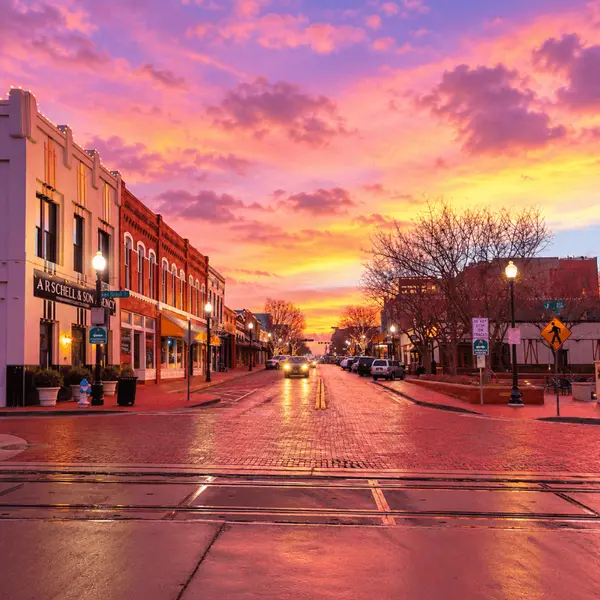
Before Richardson was a city of established neighborhoods, DART stations, corporate campuses and historic Main Street redevelopment, it was a much smaller farming area shaped by one powerful decision.
The railroad did not just come near Richardson.
It helped create Richardson.
In the 1840s, settlers from Tennessee, Kentucky and Missouri began arriving in the area. Many clustered around a small community called Breckinridge, located south of present-day Richardson near what is now Dallas College Richland Campus. Breckinridge had a general store, a blacksmith shop and the Floyd Inn.
Then, after the Civil War, the Houston & Texas Central Railway began expanding through Dallas County.
Instead of running directly through Breckinridge, the railroad built northwest of it.
And that changed everything.
The Town That Moved Toward the Tracks
In 1873, the Houston & Texas Central Railway acquired right-of-way land from George Blewett, Bernard Reilly and William J. Wheeler, then built a depot approximately two miles northwest of Breckinridge. The railway also purchased additional land from Reilly and Wheeler for a new townsite, which was named Richardson for A.S. Richardson, secretary of the Houston & Texas Central Railway.
That may sound like a small adjustment on a map, but in the 1870s, being near the railroad could determine whether a town grew or faded.
Breckinridge had been the earlier settlement, but the depot created a new center of activity. According to the Texas State Historical Association, most Breckinridge businesses, including the post office and the Grange store, moved to the new town after the railroad established Richardson nearby.
In other words, Richardson did not grow where it did by accident.
People followed access.
Businesses followed movement.
And the future of the area shifted toward the tracks.
A Tiny Railroad Town
The original Richardson townsite was generally located between present-day Greer and Phillips streets on the north and south, and between Central Expressway and Greenville Avenue on the west and east. The City of Richardson notes that the town originally had three businesses: a general store, a post office and a drug store.
It is hard to picture that today.
Modern Richardson is layered with neighborhoods, schools, shopping centers, restaurants, tech companies and major roadways. But the earliest version of the town was compact and practical.
It was built around the railroad because the railroad connected farmers, merchants, supplies and markets.
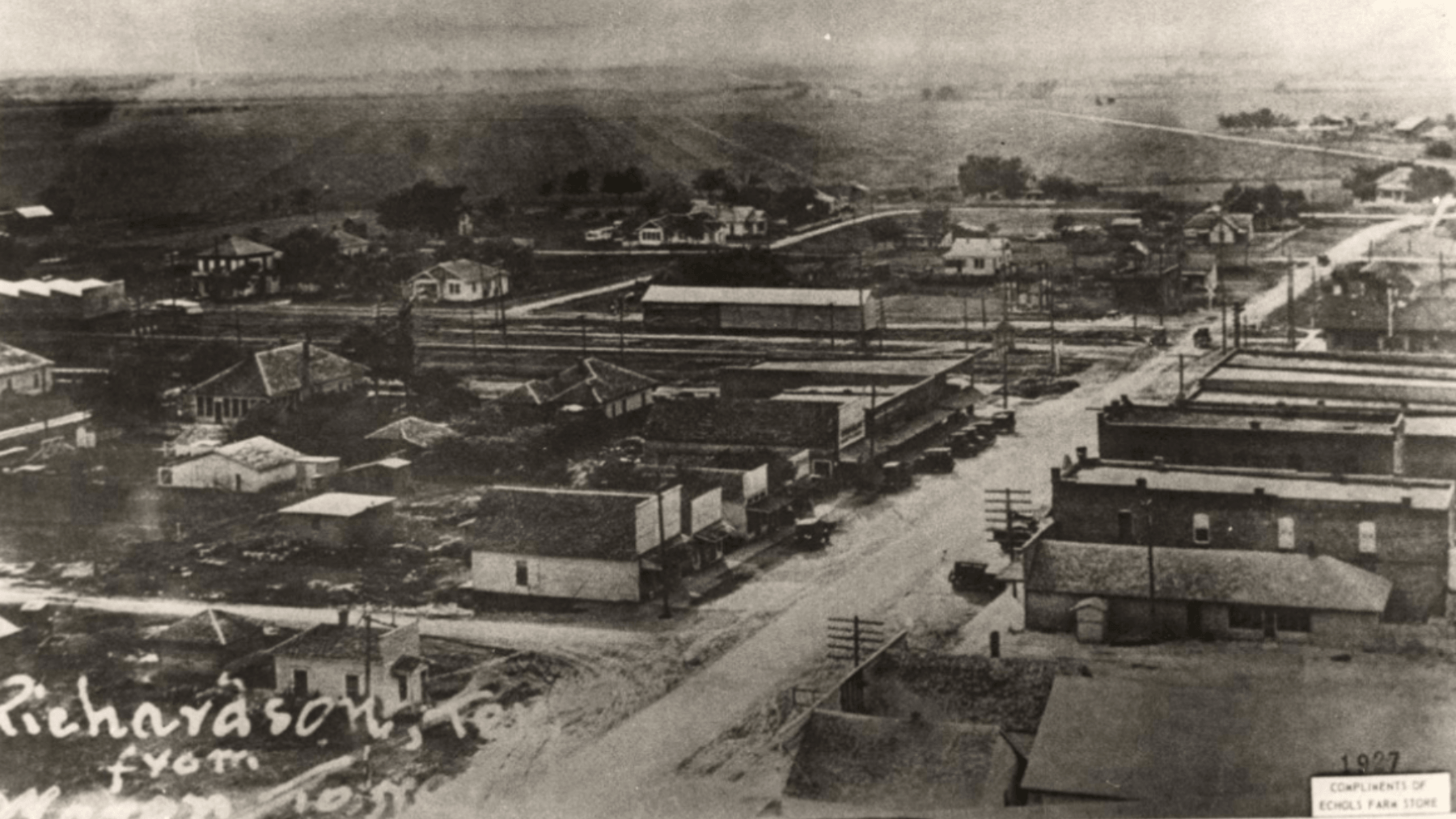
A historic 1927 elevated photo of Main Street shows how closely the railroad remained tied to the early commercial district. The image, provided by the Richardson Public Library through The Portal to Texas History, shows Main Street, railroad crossing signs, the train station, commercial buildings, residences and cultivated fields all within the same view.
That one image tells the story beautifully.
Richardson was town, farm and transportation hub all at once.
Why the Railroad Mattered So Much
Today, we talk about commute times, highway access, walkability and proximity to DART.
In the 1870s, the railroad was the version of that conversation.
For farmers, it meant crops could reach market more efficiently. For merchants, it meant goods and customers could move more easily. For residents, it meant stronger connections to Dallas and other North Texas communities.
That is why the relocation from Breckinridge toward the rail line matters so much. It was not simply a name change or a new depot. It was a shift in economic gravity.
Breckinridge faded.
Richardson grew.
And the pattern continued for generations.
From H&TC to the Interurban
The Houston & Texas Central Railway was only the beginning of Richardson’s transportation story.
In 1908, the Interurban electric railway began service through Richardson, connecting the town north to Denison, south to Waco, southeast to Corsicana and west to Fort Worth.
The Texas State Historical Association notes that Richardson’s growth accelerated after the Interurban arrived, with the town’s population growing from 147 in 1904 to more than 400 by 1925.
That makes Richardson an early example of something we still talk about today: transportation shaping real estate.
The community grew because people and goods could move.
The same theme would repeat later with Greenville Avenue, Central Expressway, the Telecom Corridor and DART light rail.
Every generation had its own version of access.
The Real Estate Lesson Hidden in the History
This is one of the reasons local history matters so much in real estate.
The places we live are shaped by decisions made long before most of us arrived.
A railroad route can move a town.
A road can change land values.
A transit stop can reshape a district.
A corporate campus can create housing demand.
A once-rural area can become one of the most desirable suburbs in North Texas because of transportation, timing and growth.
Richardson’s story is a perfect example.
The city’s earliest growth was not random. It was tied to movement, access and opportunity. The same forces still affect home values, neighborhood demand and redevelopment today.
Before It Was North Dallas
Before Richardson became part of the larger North Dallas story, it was a small railroad town built because people recognized the power of connection.
The tracks drew businesses away from Breckinridge.
The depot created a new center of activity.
Main Street grew near the rail line.
And over time, that small town became a city known for neighborhoods, schools, technology and location.
That is the thread running through this chapter of Before It Was North Dallas.
Roads, rails and access did not just help people get places.
They helped decide what those places would become.
What piece of North Dallas history do you think deserves to be remembered?
As a Richardson native and longtime North Dallas REALTOR®, I love helping people understand not only the homes in our area, but also the history, infrastructure and decisions that shaped each community. If you are thinking about buying, selling or simply trying to better understand where you live, I would be happy to help you look at the bigger picture.
Next in the series: We will stay with the transportation theme and look at the electric rail line that connected Richardson, Plano and Dallas long before today’s DART system.
💻 Read the whole Before it was North Dallas Series here
If you love learning the stories behind the places we call home, follow along with my Before It Was North Dallas series. And if you are thinking about making a move in Richardson, North Dallas or the surrounding suburbs, I’d be happy to help you understand not just the market, but the history and character behind each neighborhood. Reach out, let's chat!

Kelly Reber, REALTOR® | eXp Realty LLC | Texas License #0483312
Licensed since 2000
Dallas | Richardson | Plano | Addison | North Dallas
Dallas native Kelly Reber has been helping buyers, sellers, relocating clients, and investors navigate North Dallas real estate since 2000. She combines deep local knowledge, data-driven strategy, and straightforward advice to help clients make confident real estate decisions.
Learn more: About Me
Categories
Recent Posts