
Before It Was North Dallas, Part Four: Miss Ammie, the Sheep and the Farm Plano Saved
Before It Was North Dallas, Part Four: Miss Ammie, the Sheep and the Farm Plano Saved
Plano is now filled with neighborhoods, corporate campuses, shopping districts and major roads.
But before all of that development, it was an agricultural community surrounded by some of the most productive farmland in North Texas.
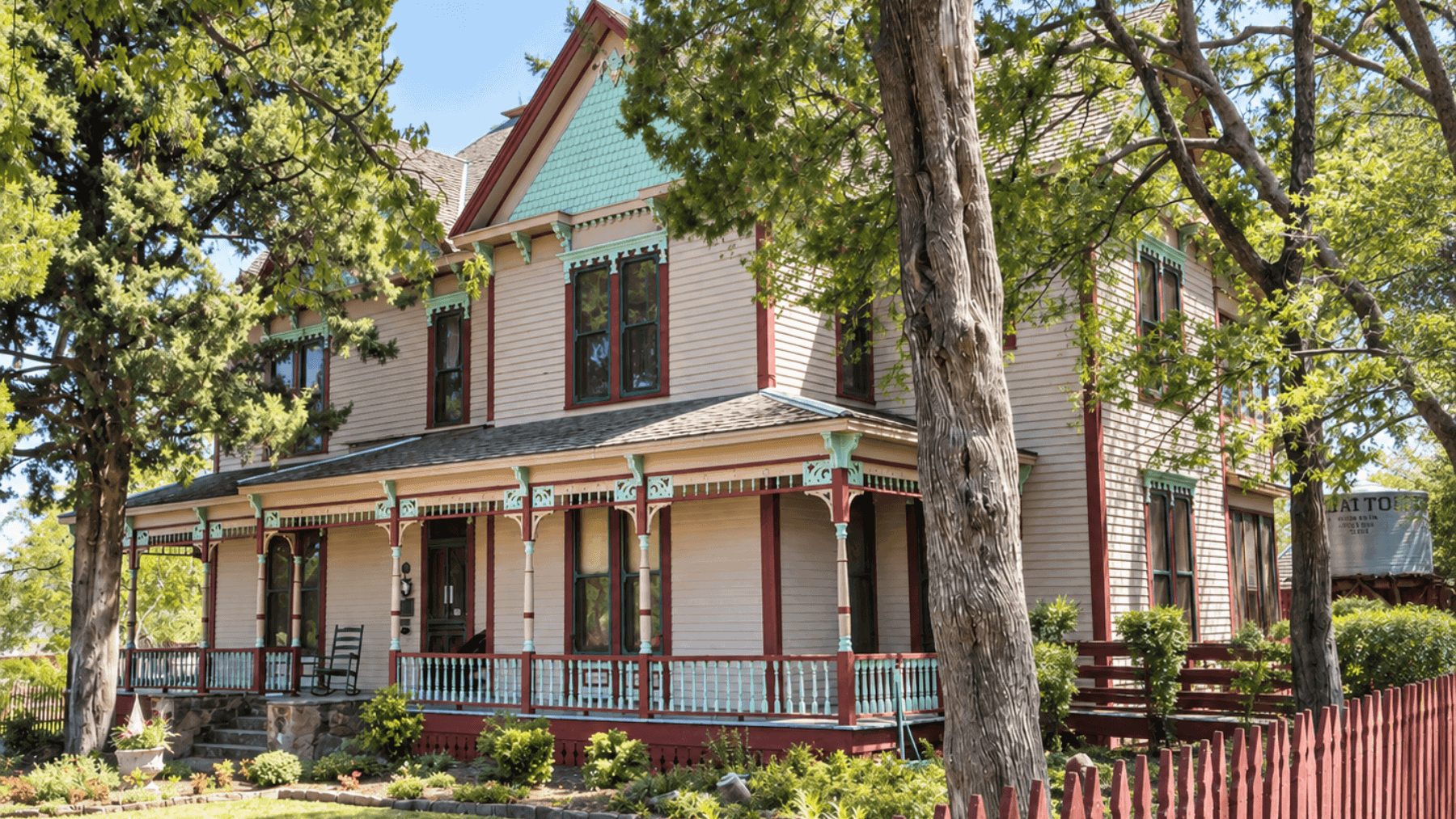
One of the best places to see that earlier version of Plano is the Heritage Farmstead Museum, where a Victorian farmhouse and its remaining grounds preserve the story of a woman known locally as Miss Ammie.
Her story feels especially fitting for the Before It Was North Dallas series because it shows us not only what Plano once looked like, but also what it took to run a successful farm when expectations for women were very different.
A Showplace on the Blackland Prairie
The property’s main house was built in 1891 by businessman Hunter Farrell for his wife, Mary Alice, and their daughter, Ammie.
The elaborate Victorian farmhouse included decorative jigsaw trim, broad wraparound porches and a north-south orientation designed to create shade and cross-ventilation before residential air conditioning existed.
The house was part of a 365-acre farm with barns and agricultural outbuildings.
It was both a family home and the center of a working agricultural operation.
The Women Who Ran the Farm
Hunter Farrell’s business interests frequently took him away from home, leaving Mary Alice Farrell to take on increasing responsibility for the farm’s wheat operation.
After the Farrells divorced in 1928, Mary Alice and Ammie retained the homeplace. One or both women continued operating the farm until 1972.
Their success challenges the assumption that early North Texas farming stories were exclusively about men.
Mary Alice managed the business side of a sizable agricultural property, while Ammie established a reputation of her own.
Miss Ammie and Her Prize-Winning Sheep
Ammie became known as a champion sheep breeder.
Until her death in 1972, she consistently won awards for her animals at major stock shows. The Heritage Farmstead Museum describes her as a successful woman operating within a field overwhelmingly dominated by men.
That detail transforms the property from simply being a beautiful historic house into the setting for a much more compelling story.
Miss Ammie was not merely maintaining a family home or casually raising livestock. She was competing, winning and building a respected agricultural business.
Her achievements are part of Plano’s history just as much as its railroads, downtown buildings and later corporate growth.
Saving the Farm
After Miss Ammie died, local preservationists formed the Plano Heritage Museum to protect the house and its remaining grounds.
The property underwent a seven-year restoration costing approximately $1.2 million before opening to the public as the Heritage Farmstead Museum.
Today, the museum preserves approximately 4.5 acres of the original property.
The site has received local landmark recognition, a Texas Historical Marker and inclusion in the National Register of Historic Places.
Only a small fraction of the original 365 acres remains, but those preserved acres provide something maps, photographs and written descriptions cannot fully replicate.
They allow visitors to experience the scale of the house, walk among the historic buildings and imagine a version of Plano defined by crops, animals and open land rather than highways and subdivisions.
What the Farm Tells Us About Plano
The Heritage Farmstead also demonstrates how dramatically land use can change within only a few generations.
What was once a large working farm is now surrounded by a fully developed city. Nearby roads carry thousands of vehicles. Homes, businesses and community amenities occupy land that would once have been part of Plano’s agricultural landscape.
Without the work of preservationists, Miss Ammie’s house might have been demolished and the remaining land redeveloped like so much of the surrounding property.
Instead, Plano retained a tangible connection to the people and industries that existed before the city’s rapid suburban expansion.
More Than a Pretty Old House
Historic preservation is sometimes treated as though it is only about architecture.
The architecture matters, but the people are what make the building meaningful.
The Heritage Farmstead Museum matters because it preserves the story of Mary Alice Farrell managing a substantial wheat farm. It preserves the story of Miss Ammie succeeding as a breeder and businesswoman. It gives Plano residents a way to understand what their city looked and felt like before modern North Dallas grew around it.
Before it was Plano as we know it, it was Blackland Prairie, wheat fields, barns and prize-winning sheep.
And one determined woman made her mark there.
What piece of North Dallas history do you think deserves to be remembered?
As a longtime North Dallas REALTOR® and someone who cares deeply about preserving local character, I believe these places help us understand why each community feels different. Homes and neighborhoods are part of a much larger story, and it is worth knowing what came before them.
Next in the series: We are returning to North Dallas, where the familiar Caruth name connects a preserved family home, vast former farmland and the remarkable life of Dr. Marcellus Clayton Cooper.
💻 Read the whole Before it was North Dallas Series here

Kelly Reber, REALTOR® | eXp Realty LLC | Texas License #0483312
Licensed since 2000
Dallas | Richardson | Plano | Addison | North Dallas
Dallas native Kelly Reber has been helping buyers, sellers, relocating clients, and investors navigate North Dallas real estate since 2000. She combines deep local knowledge, data-driven strategy, and straightforward advice to help clients make confident real estate decisions.
Learn more: About Me
Categories
Recent Posts